7 Steps to Create a Home Sanctuary That Actually Calms You
Last Updated: November 5, 2026
Quick Summary
To create a home sanctuary, pick two or three rooms and give each one a clear purpose, then clear visual clutter before adding anything. Get light, color, and texture right, and build simple scent and sound rituals you repeat at the same time each day.
Walk through each room and ask whether the space helps you slow down or speed you up.
Declutter one small zone by putting back only a third of what was there.
Switch off overhead bulbs at night and use lamps at eye level instead.
Keep one scent per room and one scent per time of day as a repeatable cue.
Run the bedroom scent and sound ritual for 10 minutes before bed.
Table of Contents
Start With a Room-by-Room Home Sanctuary Plan
A home sanctuary is a space designed to lower stress and support rest, and building one starts with a plan, not a shopping spree. A sanctuary can be thought of as a small set of rooms that do specific jobs for you.
Most people try to calm the whole house at once. That fails. Pick two or three rooms and give each one a clear purpose.
Bedroom: rest and wind-down only
Bathroom: warm water and quiet
Living room corner: reading, tea, deep breath
Entryway: a calm landing spot after work
Walk through each room and ask one question: does this space help me slow down or speed me up? Write down what you find. That list becomes your plan.
Clear the Visual Clutter Before You Add Anything
Visual clutter is the fastest way to kill a calming atmosphere. Before you buy a single candle or cushion, remove what doesn't belong.
Start with surfaces. Clear the kitchen counter, the bedside table, and the coffee table. Then tackle one drawer at a time.
A simple approach that works for most people:
Pick one small zone, like a shelf or windowsill
Take everything off it
Keep only what you use or love
Wipe the surface
Put back a third of what was there
Decluttering is not about being tidy for guests. It's about lowering the number of things your eyes have to process. Fewer objects means less noise in your head.
How to Create a Calming Home With Light, Color, and Texture
Calming light, soft color, and cozy texture do more for a peaceful home than any single purchase. Get these three right and the room starts to feel different within an hour.
Light matters most. Open the curtains and let natural light in during the day. At night, switch off overhead bulbs and use lamps instead. Soft lighting at eye level feels warmer than light from above.

Color sets the mood. A simple color palette of soft neutrals, sage, or dusty blue reads calmer than bright reds and oranges. You don't need to repaint. A throw, a few pillows, or a rug can shift the palette.
Texture adds comfort. Layer soft furnishings: a knit blanket, linen pillows, a wool rug. These cozy elements invite you to sit down and stay a while.
The combination is what works. Bright light plus hard surfaces feels clinical. Soft light plus soft texture feels like a place you can exhale.
Home Sanctuary Ideas That Cost Little and Suit Renters
Renters can build a sanctuary space without drilling a single hole. Small changes carry the whole effect, and most cost very little.
Nia_Roe
Try these home sanctuary ideas:
Move furniture to create one dedicated corner
Add a floor lamp with a warm bulb
Layer a throw and two pillows on a chair
Put a plant on the windowsill
Hang art with removable strips
Use a tray to group small items on a shelf
Tuck a lavender sachet into drawers for a quiet scent
A calm lavender aromatherapy bag fits this approach well. It needs no installation and adds a soft, herbal note to small spaces like drawers and closets.
The goal is a corner that feels like yours. You don't need permission from a landlord to make that happen.
Ways to Make Your Home More Relaxing Through Scent and Sound
Scent and sound reach the brain faster than décor does, which makes them the quickest ways to make your home more relaxing. A familiar smell or a low, steady sound can shift your mood in minutes. The key is to treat them as systems, not one-off purchases.
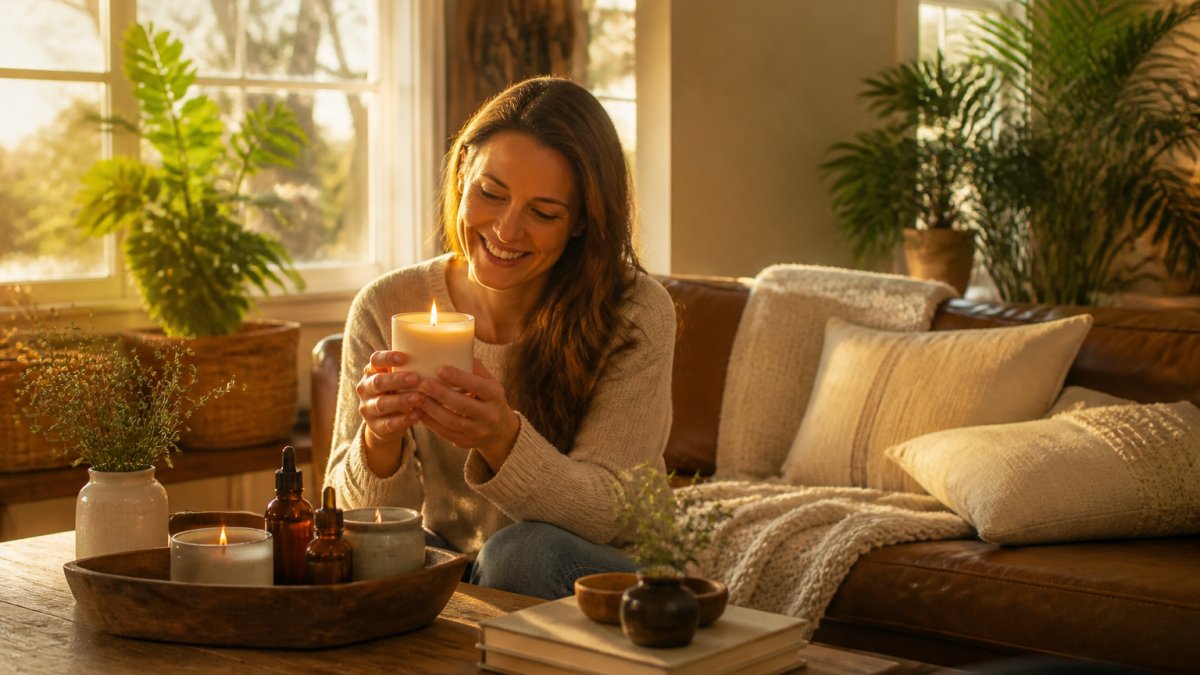
Scent: build a simple, repeatable cue. Keep it to one scent per room and one scent per time of day. In the bedroom, a lavender or clary sage note signals wind-down; in the living room, a woodier or citrus note can lift the afternoon. A lavender room and linen spray or a lavender and sage soy candle can anchor that ritual.
Sound: mask sharp noise, don't add more. The goal is a steady background hum that covers sudden sounds like traffic, neighbors, or a partner's phone call. A fan on low, a white noise machine, or a rain track at low volume works better than music with lyrics, which pulls attention. If you share walls, a door draft blocker and a thick rug do more for quiet than a speaker turned up.
Room-by-room application. In the bedroom, run the scent and sound ritual for 10 minutes before bed, same candle, same track. In the bathroom, a warm shower with a eucalyptus sachet or a botanical bath tea turns a quick wash into a short reset. In a workspace corner, keep scent out and use sound only, so the cue stays tied to focus rather than relaxation.
Maintenance. Refresh the cue weekly: trim candle wicks, wipe diffuser parts, and change the white-noise track if it starts to feel like background noise you ignore. A five-minute Sunday reset keeps the ritual from becoming invisible.
Non-Toxic Home Essentials Worth Choosing Carefully
Anything that burns or touches your skin deserves a second look. Non-toxic home essentials are the products you breathe in and absorb, so the ingredients matter more than the label design.
Read the actual list. For candles, look for soy or other plant-based wax and clear fragrance disclosure. For skin products, fewer ingredients is usually easier to track.
A short checklist before you buy:
Is the wax or base material named clearly?
Are fragrance ingredients disclosed, not just "parfum"?
Is the product made in small batches with a visible maker?
Does the brand explain how it was formulated?
A clary sage essential oil is a good example of a single-ingredient option. One oil, one use, no mystery blend. If you have sensitivities, patch test first and go slow.
Make the Sanctuary Work for Your Household and Sensory Needs
A sanctuary that ignores your household won't survive the week. The space has to fit the people, pets, and senses in it. This is where most guides stop at "add a blanket", the practical version is a short plan for each constraint.
Shared homes and families. Agree on one calm zone rather than a whole room. A corner of the living room that everyone leaves quiet works better than a bedroom nobody can protect.
Pets. A washable throw on the sanctuary chair, a covered basket for toys, and a lint roller within reach keep the space from becoming a pet zone. If a pet claims the spot, give them their own bed nearby so the corner stays yours.
Sensory needs. Control the inputs one at a time:
Sound: earplugs, a white noise machine, or a closed door; a rug and draft blocker reduce echo and outside noise.
Light: a dimmer, a lamp with a warm bulb, or an eye mask; avoid overhead fluorescents in the sanctuary zone.
Smell: unscented options in shared rooms, scent only in your own space; if you have sensitivities, patch test first and go slow.
Touch: one soft blanket within arm's reach of your spot; a weighted lap pad if deep pressure helps.
Maintenance. A five-minute evening reset, clear the tray, fold the throw, blow out the candle, keeps the space from sliding back into clutter. A weekly check of the calm zone (is it still quiet? is the lamp still warm?) catches drift before it becomes the norm.
If you're navigating hormonal shifts, keep the space flexible. What feels soothing one week may feel overwhelming the next. Adjust without guilt. Personal decompression time counts too, a warm soak with a botanical bath tea is one way to build a short, restorative ritual into the week.
Watch out: buying a dozen organizers before you agree on the calm zone just moves the clutter, settle the household rules first, then add storage.
Build Your Sanctuary One Corner at a Time With Aura & Amity
You don't need a full redesign. One corner, done well, changes how a room feels. That's the throughline here: small, intentional moves beat big, expensive ones.
Here's how we'd sequence it over a few weeks:
Step | What to do | Time | Priority |
1 | Clear one surface of visual clutter | 20 minutes | High |
2 | Add a lamp with a warm bulb | 15 minutes | High |
3 | Layer one throw and two pillows | 10 minutes | Medium |
4 | Add a plant or greenery | 15 minutes | Medium |
5 | Set a scent and sound ritual | 5 minutes nightly | High |
6 | Personalize with one meaningful object | 10 minutes | Medium |
Maintaining it matters as much as building it. A five-minute reset each evening keeps the space from sliding back into clutter.
Watch out: buying a dozen items before you clear anything. New décor on top of clutter just adds to the noise.
At Aura & Amity, our toxin-free soy candles and botanical body care are made to support this kind of unhurried calm. Each product is created by a licensed mental health therapist and hand-poured in small batches, with scent chosen to ground rather than overwhelm. It helps to know what you're bringing into a room.
The challenge is simple: pick one corner this week and make it yours. Explore the Aura & Amity collection and turn that corner into a daily sanctuary you actually use.
Frequently Asked Questions
How do you turn your house into a sanctuary?
Start with one room instead of the whole house. Clear surfaces, remove anything that does not belong there, then layer in softer light, a blanket or two, and one plant. Add a scent you associate with rest, such as a soy candle lit for 30 to 60 minutes in the evening. Repeat the same routine in the next room a week later. A home sanctuary is built through small, repeatable changes rather than a single weekend overhaul.
Can your home be a sanctuary if you live in a small apartment?
Yes. A home sanctuary needs a dedicated corner more than square footage. A bedside table, a windowsill, or one armchair with a side table can hold everything a sanctuary needs: soft light, a throw, a plant, and a scent. Renter-friendly changes like leaning art, removable hooks, and layered textiles do the work without touching the walls. Focus on one corner you use daily and let the rest of the apartment follow gradually.
What should I put in a home sanctuary?
Keep it to a few categories: something soft (a blanket or pillow), something alive (a plant or fresh stems), something warm (a lamp or candle rather than overhead light), and something personal (a photo, a letter, an object with a memory attached). A non-toxic soy candle and a simple body care item, like a botanical hand cream, give the space a sensory ritual without adding clutter. Fewer, better-chosen objects create more calm than a full shelf of decor.
How can I make my home more relaxing on a budget?
Most of the work costs nothing. Declutter one surface, move a lamp off the overhead switch, and open the curtains earlier. When you do spend, prioritize items you touch daily: a better pillow, a soft throw, a candle made from soy wax rather than paraffin. Thrift stores and clearance aisles cover textiles and planters well. Spend more only on things that go on your skin or burn in your air, since those affect you most directly.


Comments