5 Ways to Use Essential Oils for Daily Calm
Table of Contents
Why a Daily Calm Ritual Matters (and How to Start)
1. How to Use Essential Oils in an Essential Oil Diffuser
Choosing the Right Diffuser and Timing
2. Topical Application: Dilution, Pulse Points, and Safe Everyday Use
5. Essential Oils for Sleep and a Calmer Bedtime Routine
Safety First: Pets, Household, and Realistic Expectations
Pets
Children and Household Air
Storage and Label Literacy
Realistic Expectations
Conclusion: Building Your Daily Calm Practice
Frequently Asked Questions
Last Updated: October 14, 2026
Why a Daily Calm Ritual Matters (and How to Start)
A daily calm ritual built on essential oils for daily calm is a small, repeated practice that tells your nervous system it is safe to slow down. It does not need to take an hour.
Here is the honest part most guides skip. Aromatherapy is not a treatment for anxiety or a replacement for medical care. The evidence for essential oils is mixed, and results vary from person to person.
Below, we walk through five practical ways to use essential oils, plus the safety details that keep them enjoyable long term.
1. How to Use Essential Oils in an Essential Oil Diffuser
Diffusing is the easiest way to fill a room with scent and the most popular method for beginners. Add water to the reservoir, drop in your oils, and let the mist carry the aroma into the air.
Tish Wonders
A few things matter more than people expect:
Keep sessions short. Run the diffuser for 30 to 60 minutes, then let the room air out.
Ventilate. Crack a window or leave the door open so the scent does not build up.
Start small. Three to five drops total is plenty for a standard bedroom.
Skip it around pets and small children. More on that below.
Choosing the Right Diffuser and Timing
Ultrasonic diffusers are the most common choice because they run quietly and do not heat the oil. That matters, since heat can change how an oil smells.
Timing is where a daily calm practice really takes shape. Diffuse while you make coffee, while you read, or in the 30 minutes before bed. Same time, same scent, most days. That repetition is what turns a pleasant smell into a signal your body starts to recognize.
2. Topical Application: Dilution, Pulse Points, and Safe Everyday Use
Topical application means putting diluted essential oil on your skin. The key word is diluted.
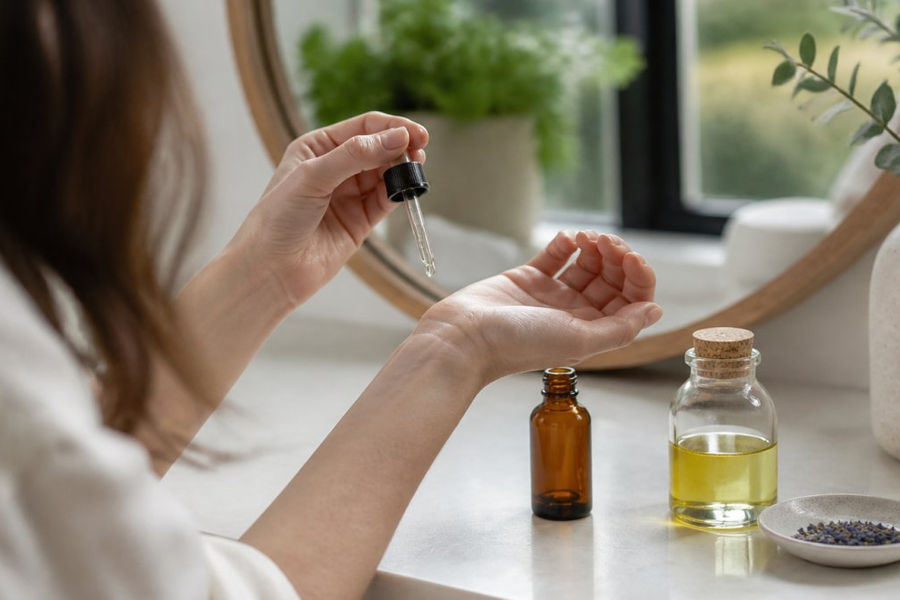
(/category/room-linen-spray) work the same way. Mix about 10 to 15 drops of essential oil with a tablespoon of witch hazel or high-proof alcohol in a spray bottle, then top with water.
A few ways to build a spa-like ritual:
Dim the lights and light a soy candle
Run a warm bath with a lavender or cedarwood blend
Mist your pillow and sheets before bed
Play one album, start to finish, with no phone
The point is not perfection. It is a clear beginning and end to the ritual, so your body learns the cue.
5. Essential Oils for Sleep and a Calmer Bedtime Routine
For sleep, the goal is consistency, not intensity. Pick one or two scents and use them only at bedtime. Over time, that scent becomes a signal that sleep is next.
Essential oils for sleep that people reach for most often include lavender, cedarwood, Roman chamomile, and vetiver. Diffuse for 30 minutes before bed, or apply a diluted drop to your wrists and the soles of your feet.
Pair the scent with a short, repeatable routine:
Set the diffuser 30 minutes before bed
Dim the lights and put your phone in another room
Do 5 minutes of stretching or journaling
Apply diluted oil to wrists and chest
Get into bed at the same time each night
Safety First: Pets, Household, and Realistic Expectations
Safety comes before scent, every time. Essential oils are potent volatile compounds, and the same concentration that feels pleasant to you can be a problem for a pet, a small child, or someone with asthma. This is the section most guides skip, and it is the one that keeps a daily ritual sustainable.
Pets
Cats are the highest-risk household animal for essential oil exposure. Their livers lack an efficient pathway for metabolizing many of the compounds found in essential oils, so oils that are fine for humans can accumulate and cause harm. Citrus, tea tree, peppermint, eucalyptus, wintergreen, pine, and cinnamon are among the oils most often flagged. Dogs are generally more tolerant but still sensitive to high concentrations and to oils like tea tree and wintergreen.
Practical rules for a home with pets:
Never diffuse in a closed room with a pet. Ventilate, and give the animal a way to leave the room.
Do not apply oils to a pet's fur, paws, or skin unless a veterinarian has specifically directed it.
Store bottles where pets cannot reach them. A dropped or chewed bottle is a common route to accidental ingestion.
Watch for symptoms such as drooling, vomiting, lethargy, wobbliness, or difficulty breathing, and contact your veterinarian or a pet poison control line right away if you see them.
Skip topical oils on your own skin if your pet licks or nuzzles that area frequently.
Children and Household Air
Diffuse in well-ventilated rooms and keep sessions to 30 to 60 minutes.
Do not diffuse around infants, and check with a pediatrician before using oils around toddlers.
If anyone in the home has asthma or a fragrance sensitivity, treat strong diffusing as a potential trigger and start with the shortest, weakest session you can.
Never ingest essential oils unless a qualified professional directs you to. "Ingestible" or "food grade" language on a label is not a safety guarantee.
Storage and Label Literacy
Store bottles upright, caps tight, away from heat and direct light. A cool, dark cabinet is ideal.
Citrus oils oxidize faster than most; a bottle older than about a year may smell sharp and irritate skin more easily.
Read the label for the botanical name (for example, Lavandula angustifolia), the plant part used, and whether the oil is a single oil or a blend. "Therapeutic grade" and "pure" are marketing terms, not regulated standards.
Prefer dark glass bottles with a dropper or orifice reducer over clear plastic, which can degrade over time.
Realistic Expectations
Scent can support a calm routine, but it will not replace sleep, movement, therapy, or medical care. The research on aromatherapy and calm is mixed: some small studies suggest a subjective relaxation effect, but the evidence is not strong enough to support claims that oils treat anxiety or insomnia. If anxiety or sleep problems are affecting your daily life, talk to a professional. The National Center for Complementary and Integrative Health offers a balanced look at what aromatherapy can and cannot do.
Key Takeaway The oil is the cue, not the cure. What actually calms you is the repeated ritual around it: same scent, same time, same few minutes of quiet.
Conclusion: Building Your Daily Calm Practice
Start with one method, not five. Pick the diffuser if you want the least effort, or the pulse point routine if you want something you can carry with you. Add a bath or a room spray once the first habit sticks.
Aura & Amity was created by a licensed mental health therapist, and every product is built around this exact idea: scent as a grounding ritual, not a quick fix.
Get started with Aura & Amity and build a calm ritual you will actually keep.
Frequently Asked Questions
What is the best essential oil for calmness?
Lavender is the most researched and commonly recommended oil for calm and relaxation. Cedarwood, Roman chamomile, and frankincense are also popular choices. The best oil for you often comes down to scent preference: if lavender feels too floral, try cedarwood or a citrus-and-herbal blend. Aura & Amity offers curated aromatherapy options to help you find a scent that feels grounding rather than overpowering.
Where should I apply essential oils for anxiety or stress relief?
Diluted essential oils are commonly applied to pulse points like the wrists, neck, and behind the ears, as well as the chest and solar plexus. Always dilute with a carrier oil first, especially for sensitive skin. For a quick grounding moment, place a drop on your wrists, cup your hands near your face, and take a slow breath. Avoid broken skin, eyes, and mucous membranes.
What are some good essential oil combinations for relaxation?
Try lavender with cedarwood for a warm, woody calm; lavender with bergamot for a bright, uplifting relaxation; or frankincense with sweet orange for a grounding, cozy blend. For sleep, combine lavender and Roman chamomile. Start with a 2:1 ratio of your main calming oil to the supporting oil, and adjust based on scent preference. Always test a small amount first.
How can I use essential oils safely at home, especially around pets?
Always dilute essential oils for skin use, follow recommended dilution rates (1-2% for adults), and keep bottles out of reach of children and pets. Diffuse in well-ventilated rooms for 30-60 minutes at a time. Some oils, including tea tree, eucalyptus, and citrus, can be toxic to cats and dogs, so check with your veterinarian before diffusing around pets or using topical oils on animals.
Shop Now
Comments