Aromatherapy Candles for Stress Relief: A Practical Guide
Table of Contents
How Aromatherapy Candles Support Stress Relief
Best Candle Scents for Relaxation and Calm
Lavender: The Foundation of Calming Aromatherapy
Chamomile, Bergamot, and Citrus: Supporting Scents
Eucalyptus, Frankincense, and Grounding Blends
Essential Oil Blends for Relaxation vs. Fragrance Oils
Essential Oils: Source, Strength, and Transparency
Fragrance Oils: Consistency, Disclosure, and "Natural" Claims
How to Read Labels and Ask the Right Questions
Neither Is Inherently Better, It Depends on Your Needs
How to Make a Stress Relief Candle at Home
Ingredients and Supplies You'll Need
Step-by-Step Candle Making Process
Using Candles Safely: Candle Safety Tips and Best Practices
Creating Your Stress-Relief Ritual: Practical Ways to Use Aromatherapy Candles
Step 1: Test Your Scent Before Committing
Step 2: Prepare Your Space
Step 3: Light the Candle and Establish a Baseline
Step 4: Pair the Candle With a Breathing or Grounding Practice
Step 5: Use the Candle at the Same Time Each Day
Step 6: Burn Your Candle Safely and Sustainably
The Ritual Matters as Much as the Scent
What Science Actually Tells Us About Aromatherapy Candles and Stress
Frequently Asked Questions
Last Updated: October 10, 2026
How Aromatherapy Candles Support Stress Relief
Aromatherapy candles for stress relief work by releasing fragrant molecules into the air that your brain processes through the olfactory system. When you inhale these scents, they can trigger emotional and physical responses that promote relaxation.
Your sense of smell links directly to the limbic system, which controls emotions and memory, which is why certain scents feel calming without conscious effort.
At Aura & Amity, we create toxin-free soy candles specifically designed to support relaxation and ease. Each blend is crafted with intention by a licensed mental health therapist who understands how scent can anchor you during stressful moments.
Using aromatherapy candles for stress relief is simple: light a candle, breathe naturally, and pair it with five minutes of quiet time for a powerful reset.
Pro Tip The best results come from consistency. Light your candle at the same time each day, morning coffee, afternoon slump, or evening wind-down. Your brain begins to associate that scent with calm, making the effect stronger over time.
Best Candle Scents for Relaxation and Calm
Different scents trigger different responses, some ground scattered energy, others ease tension. The key is finding what resonates with your nervous system.
Lavender: The Foundation of Calming Aromatherapy
Lavender is the most recognized scent for relaxation. Your brain recognizes it as a signal to slow down, making it ideal for bedrooms and evening routines. It pairs well with other calming oils and is a reliable starting point for beginners.
Chamomile, Bergamot, and Citrus: Supporting Scents
Chamomile brings gentle warmth and complements lavender. Bergamot adds brightness while remaining calming, useful when you need to relax but stay focused. Citrus scents offer similar balance. Blending these with lavender prevents candles from feeling one-dimensional.
Eucalyptus, Frankincense, and Grounding Blends
Eucalyptus clears mental fog and grounds scattered energy. Frankincense is deeper and meditative, ideal for meditation or journaling. Grounding blends of sage, cedarwood, and vetiver anchor you during chaos or major life transitions.
Key Takeaway The best scent for you depends on what your nervous system needs in that moment. Calming for sleep? Try lavender. Mental clarity? Choose bergamot. Grounding during change? Pick an earthy blend.
Essential Oil Blends for Relaxation vs. Fragrance Oils
Understanding the difference between essential oils and fragrance oils, and how to identify which one you're actually buying, helps you choose the right aromatherapy candles for stress relief and avoid misleading marketing claims.
Essential Oils: Source, Strength, and Transparency
Essential oils come from plants through distillation or cold pressing and are regulated by the FDA. Reputable labels list specific oils by name (lavender, bergamot, eucalyptus, frankincense). Essential oil candles have subtler, authentic scents but fade faster and cost more. If an "essential oil" candle is priced like a mass-market fragrance candle, the essential oil content is likely minimal.
Fragrance Oils: Consistency, Disclosure, and "Natural" Claims
Fragrance oils are lab-created blends that may contain natural compounds, synthetics, or both. The FDA doesn't require disclosure of individual components, so "fragrance" on a label tells you nothing about allergens or phthalates. Fragrance oils offer consistency and strong scent throw. Terms like "natural fragrance" and "nature-identical" are unregulated and don't guarantee plant-derived or safer products.
How to Read Labels and Ask the Right Questions
When shopping, look for: transparent ingredient lists naming specific oils, third-party testing certifications, price alignment with ingredients (essential oils cost more), scent descriptions ("subtle" suggests essential oils; "strong throw" suggests fragrance oils), and disclosure of phthalates or allergens if you have sensitivities.
Neither Is Inherently Better, It Depends on Your Needs
Essential oil candles offer authenticity and may be safer for sensitivities but cost more and fade faster. Fragrance oil candles offer consistency, strength, and affordability but less transparency. Choose based on your priorities: transparency and natural preference (essential oils) or scent strength and cost (fragrance oils). Either supports stress relief if the scent resonates and the candle is used safely.
How to Make a Stress Relief Candle at Home
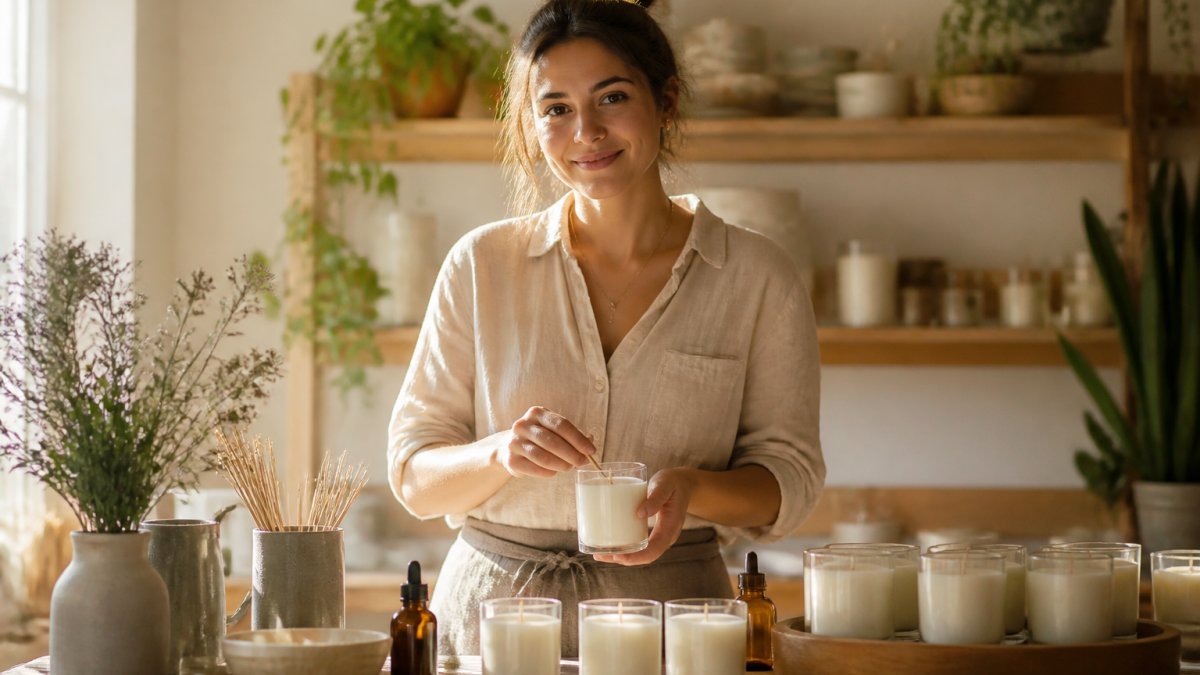
Making your own aromatherapy candles for stress relief lets you control every ingredient and scent blend.
Ingredients and Supplies You'll Need
Gather: soy wax or beeswax (4-8 ounces), essential or fragrance oils (10-15 drops), wicks and holders, heat-safe containers, double boiler, thermometer, and stirring utensil. Soy wax burns cleanly and holds fragrance well; beeswax burns longer but costs more.
Step-by-Step Candle Making Process
Step 1: Prepare Your Container Place the wick in the center of your jar using a wick holder.
Step 2: Melt Your Wax Heat wax to 170-180°F in a double boiler. Stir occasionally. Never let it boil.
Step 3: Add Your Fragrance Remove wax from heat. Let it cool to 140°F. Add 10-15 drops of essential oils or fragrance oils.
Step 4: Pour Into Container Slowly pour melted wax into your jar, keeping the wick centered.
Step 5: Let It Cool Allow the candle to cool completely at room temperature. This takes 24 hours. Don't move it during cooling.
Step 6: Trim the Wick Cut the wick to one-quarter inch above the wax surface before lighting.
Watch Out Never leave melting wax unattended. Wax is flammable. Keep it away from water and direct heat sources. Always use a thermometer to monitor temperature.
Using Candles Safely: Candle Safety Tips and Best Practices
Safe candle use protects your home and health.
Keep candles away from drafts, curtains, and anything flammable. Never leave a burning candle unattended. Keep them out of reach of children and pets.
Trim wicks to one-quarter inch before each use. Long wicks create excess smoke and soot.
Burn candles for no more than four hours at a time. Let them cool before relighting.
Ensure good ventilation in your space. A room that's too sealed can accumulate fragrance molecules, which may trigger headaches instead of relaxation.
Stop using a candle when about half an inch of wax remains at the bottom. Burning past this point risks damaging the container or releasing excess heat.
Creating Your Stress-Relief Ritual: Practical Ways to Use Aromatherapy Candles
A ritual transforms a candle from background scent into a meaningful practice. But knowing how to build that ritual, from choosing the right scent to using it consistently, is what makes the difference between a candle that sits unused and one that becomes part of your daily calm.

Step 1: Test Your Scent Before Committing
Test scents before committing: use samples, scent strips, or brief sniffs from a few inches away (your nose adapts quickly). Read online reviews for scent strength and longevity. Pay attention to your immediate reaction, does it feel calming, energizing, or neutral? If a scent feels off, no ritual will make it work. If sensitive to fragrance, start with subtle or essential oil candles for five minutes and watch for headaches or irritation.
Step 2: Prepare Your Space
Set up your space: crack a window for ventilation (sealed rooms accumulate fragrance), dim overhead lights, silence your phone, sit comfortably, and adjust temperature. These elements matter as much as the scent itself.
Step 3: Light the Candle and Establish a Baseline
Light your candle and sit quietly for 30 seconds, noticing the scent, warmth, and sound. This pause signals intention to your brain. Observe without trying to feel calm, this removes pressure and lets your nervous system settle naturally.
Step 4: Pair the Candle With a Breathing or Grounding Practice
Pair scent with a simple practice: box breathing (4-4-4-4 pattern), sensory grounding (5-4-3-2-1 senses), meditation or journaling, or gentle movement. Choose one and stick with it, consistency matters more than variety.
Step 5: Use the Candle at the Same Time Each Day
Light your candle at the same time daily to train your nervous system. After 2-3 weeks, your brain relaxes at the moment of lighting. Try: morning clarity (bergamot/citrus with coffee), afternoon reset (5 minutes away from work), evening wind-down (lavender/chamomile before bed), or transition ritual (grounding blend during major changes).
Step 6: Burn Your Candle Safely and Sustainably
A candle that causes headaches, triggers allergies, or produces excess soot works against relaxation.
Trim the wick to one-quarter inch before each use. Long wicks create excess smoke and soot, which can trigger headaches and irritate airways.
Burn for no more than four hours at a time. Longer burns overheat the wax and container.
Stop using the candle when about half an inch of wax remains at the bottom.
Ensure good ventilation. If you notice the scent becoming overwhelming or you develop a headache, crack a window.
Keep the candle away from drafts, curtains, and anything flammable. Never leave a burning candle unattended. Keep it out of reach of children and pets.
The Ritual Matters as Much as the Scent
Your brain learns to associate that moment, the lighting, the scent, the quiet time, with calm. Over time, even the intention to light the candle begins to shift your nervous system. This is why consistency and simplicity matter more than finding the perfect scent.
Keep your ritual simple. One candle, five to ten minutes, same time each day. Complicated routines feel like another task. Simple ones become habits you actually keep.
Pro Tip If you miss a day, don't restart from zero. Just light the candle the next day at the usual time. Rituals are built on consistency, not perfection. Two weeks of daily use is enough for your brain to begin associating the scent with calm.
What Science Actually Tells Us About Aromatherapy Candles and Stress
Aromatherapy candles for stress relief have real effects, but within limits. Understanding what research actually shows helps you use them realistically.
Scent does influence mood and nervous system activation. Studies on specific essential oils show measurable changes in heart rate and cortisol levels.
However, the effect is modest and individual. What calms one person might do nothing for another.
Aromatherapy candles work best as part of a broader stress-management approach, not as a standalone solution.
The ritual and intention matter as much as the scent itself. Lighting a candle signals to your brain that you're choosing calm.
Candle safety is more important than chasing the perfect scent.
Finding calm through aromatherapy candles for stress relief is about matching the right scent to your needs and using it consistently. Aura & Amity's hand-poured, toxin-free soy candles are created by a licensed mental health therapist who understands how fragrance supports emotional wellbeing.
Frequently Asked Questions
How do aromatherapy candles actually help with stress relief?
Aromatherapy candles release fragrance into the air, which travels to your olfactory system and can influence mood and relaxation. Certain scents like lavender, chamomile, and bergamot have long associations with calming effects. While candles aren't a medical treatment, they can be part of a sensory ritual that signals to your body it's time to slow down. The act of lighting a candle, focusing on its scent, and creating intentional space for yourself supports stress relief through both the fragrance and the ritual itself.
What's the difference between essential oil candles and fragrance oil candles for relaxation?
Essential oil candles contain concentrated plant oils extracted directly from botanicals, offering authentic scent profiles and potential aromatherapy benefits. Fragrance oil candles use synthetic or blended fragrance compounds that may smell similar but don't carry the same botanical properties. Essential oil candles tend to have shorter burn times and cost more, while fragrance oils are more stable and longer-lasting. For stress relief, essential oil blends for relaxation often provide a more authentic experience, though quality fragrance oils can also support a calming atmosphere.
How long should I burn a candle for stress relief?
Most candles are safe to burn for 3-4 hours at a time, with a recommended maximum of 4 hours per session. For stress relief, even 15-30 minutes of intentional time with a lit candle can be effective, you don't need extended burn times to benefit from the scent and ritual. Shorter, consistent sessions (like lighting a candle during your morning coffee or evening wind-down) often work better than occasional long burns. Always follow the candle's specific burn time recommendations and never leave a burning candle unattended.
What candle safety tips should I follow when using aromatherapy candles at home?
Keep candles away from drafts, curtains, and flammable objects. Never leave a burning candle unattended, and always extinguish it before leaving the room. Trim wicks to 1/4 inch to prevent excessive smoking and soot buildup, which can affect indoor air quality. Avoid burning candles in very small, poorly ventilated spaces, and ensure adequate air circulation in your room. If you have sensitivities to fragrance, start with candle safety tips like burning in well-ventilated areas and limiting burn time. Store candles in a cool place away from direct sunlight.
Shop Now
Comments