What Is the #1 Toxin in Our Homes? A Clear Answer
Table of Contents
Last Updated: October 17, 2026
The Number One Toxin in Our Homes, Ranked
The number one toxin in our homes is formaldehyde, a colorless gas released by pressed-wood furniture, some paints, and many household products. It tops our list because it is common, it builds up indoors, and it is a known carcinogen. The honest answer is that "number one" depends on how you measure risk. Below, we'll show you exactly how we ranked each toxin so you can judge our reasoning yourself.
How We Ranked the Top Household Toxins
We scored each toxin on four factors: how widespread it is, how easily it enters the body, how strong the health evidence is, and how much control you have over it. A toxin scores high when it is found in most homes and is hard to avoid. Formaldehyde wins on all four counts. It sits in furniture, flooring, and insulation, and it off-gasses for years.
Key Takeaway Ranking toxins is not about the most dramatic danger. It is about which one you are most likely to breathe in, in your own living room, every day.
Common Household Toxins and Where They Hide
Most chemical exposure happens quietly, through everyday items you never think to question. The EPA's indoor air quality guidance notes that indoor pollutant levels can run higher than outdoor levels. That is the core problem: your home traps what it releases.
Here is where the biggest offenders turn up:
Formaldehyde: pressed wood, cabinets, some fabrics
PFAS: nonstick pans, stain-resistant rugs, food packaging
Phthalates: fragranced products, vinyl, soft plastics
VOCs: paints, adhesives, new furniture
Lead: older paint and plumbing
Cleaning sprays: ammonia, chlorine, and synthetic fragrance
Formaldehyde, VOCs, and Indoor Air Pollution
Volatile organic compounds (VOCs) are gases that evaporate from many solids and liquids at room temperature. New furniture and fresh paint are classic sources. Formaldehyde is the VOC we worry about most, because it off-gasses slowly and lingers.
The fix is simple and cheap. Open windows. Let new furniture air out in the garage for a few days before bringing it inside.
PFAS, Phthalates, and Fragranced Products
PFAS, or per- and polyfluoroalkyl substances, are the "forever chemicals" used in nonstick cookware and stain-resistant fabrics. They break down very slowly. Phthalates hide in synthetic fragrance, which is why "fragrance" on a label tells you almost nothing.
A common mistake is trusting a "fresh scent" as a sign of a clean home. Many air fresheners and sprays add to your chemical load instead of reducing it.
Indoor Air Quality and Household Chemicals: Why Exposure Adds Up
The dose matters more than the label. Every spray, candle, and new cushion adds a little to the total you breathe, and those small amounts stack over time. This is why ventilation and fewer products beat any single swap.
Exposure also comes through your skin and mouth, not just your lungs. Food containers, cookware, and lotions all count. CDC information on chemical exposure explains how contact routes shape real risk.
How to Reduce Toxins in Your Home: A Room-by-Room Plan
Reducing toxins starts with the rooms where you spend the most time and breathe the most air, and with a short assessment before you buy anything. Work through the steps below in order. The goal is to lower your total exposure, not to achieve a perfect home.
Step 1: A Quick Home Assessment
Before changing products, spend ten minutes answering four questions:
How old is the home? Homes built before the late 1970s are more likely to contain lead paint and lead plumbing. If you are unsure, assume lead is possible until tested.
Is there a basement or ground-contact level? Radon is a colorless, odorless gas that can accumulate in lower levels. Testing is the only way to know, and home test kits are widely available at hardware stores.
Do you have fuel-burning appliances? Gas stoves, furnaces, water heaters, and attached garages are carbon monoxide sources. A carbon monoxide alarm on each level is a baseline safety step, not an optional upgrade.
What is new or recently renovated? New furniture, flooring, paint, and cabinets are the main sources of formaldehyde and other VOCs, and their emissions are highest in the first weeks and months.
Step 2: Know When to Test and When to Call a Professional
Testing is most useful when it answers a specific question. Use this priority order:
Carbon monoxide: Install alarms first. This is a safety issue, not a long-term exposure question.
Radon: Test the lowest livable level of the home. If results are elevated, a qualified mitigator can install a system.
Lead: Use a swab test on painted surfaces in older homes, and consider a professional risk assessment if you have young children or are planning a renovation that will disturb paint.
Formaldehyde and VOCs: Home kits and monitors exist, but readings vary widely and are hard to interpret without context. For most households, ventilation and source reduction matter more than a one-time reading. If you suspect a serious problem, a qualified indoor air professional is the right call.
A common mistake is buying a monitor before fixing the obvious sources. Test to answer a question, not to collect data.
Step 3: Room-by-Room Priorities
Work through these in order of impact:
Bedroom: You spend roughly a third of your life there. Air out a new mattress before use, choose unscented bedding and laundry, and keep a window cracked when weather allows.
Kitchen: Replace scratched nonstick pans, store and reheat food in glass rather than plastic, and run the exhaust fan when cooking with gas.
Bathroom: Cut back on heavily fragranced sprays and synthetic perfumes, and ventilate to control moisture that encourages mold.
Living room: Open windows daily, dust with a damp cloth to capture settled particles, and let new furniture off-gas in a garage or well-ventilated room before bringing it inside.
Laundry and storage: Skip synthetic fragrance boosters, and store solvents, paints, and fuels outside living space.

A Budget-Based Action Plan
Budget | First Move | Why It Helps |
No cost | Open windows 10 minutes daily; run the kitchen exhaust fan | Cuts indoor buildup of VOCs and combustion byproducts |
Low cost | Swap one fragranced spray for an unscented option; add a carbon monoxide alarm | Removes a phthalate source; addresses a safety risk |
Moderate | Replace scratched nonstick pans; test for radon | Reduces PFAS exposure; identifies an invisible hazard |
Higher | Choose solid-wood or low-emission furniture; hire a radon mitigator if needed | Lowers formaldehyde; fixes a measured problem |
Special Situations: Renters, Children, and Pregnancy
Not every household can renovate or replace appliances. If you rent, focus on what you control: ventilation, unscented products, glass food storage, and a carbon monoxide alarm you can take with you. Ask your landlord about radon testing and lead paint disclosure, which many jurisdictions require at lease signing.
Households with young children or a pregnancy should prioritize lead and carbon monoxide first, because those risks are acute and well established. Keep children away from peeling paint, wash hands before meals, and wet-clean dust rather than dry-sweeping it into the air.
Pro Tip You do not need to overhaul your whole home at once. Fix the safety items first, alarms and lead, then pick the room you sleep in. Better sleep air is the change most people actually notice.
Safer Alternatives to Household Cleaners and Sprays
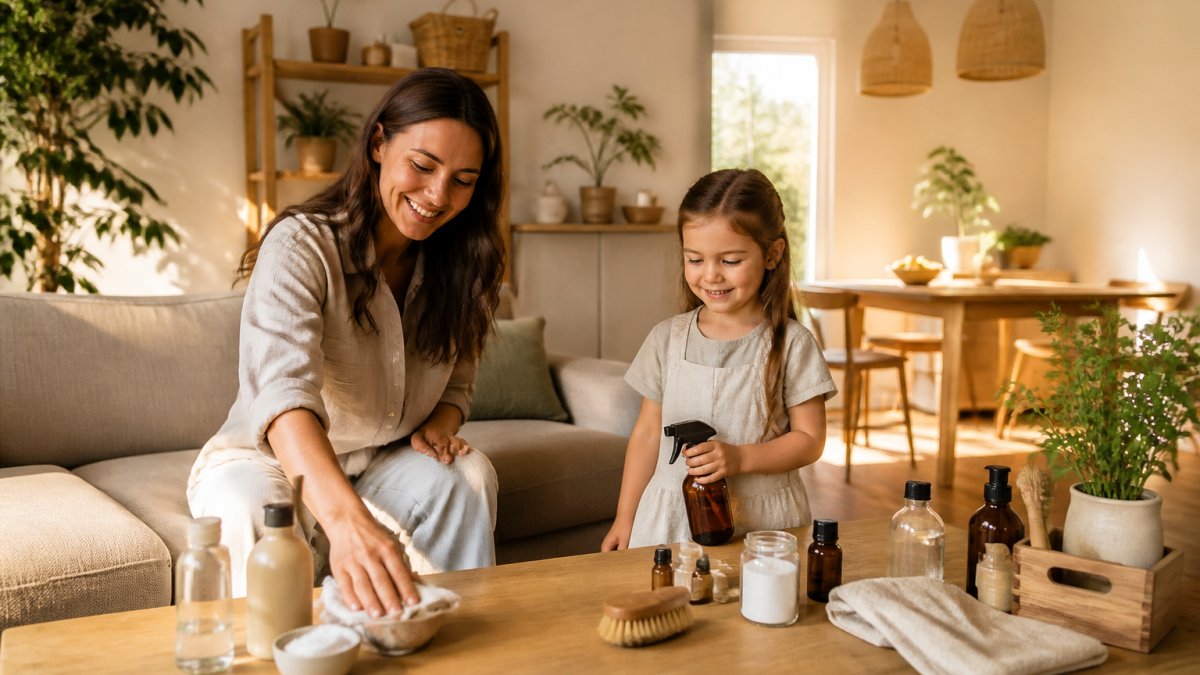
Safer cleaning does not mean a cabinet full of specialty products. Simple ingredients handle most jobs:
White vinegar for glass and light buildup
Baking soda for scrubbing
Castile soap for general wiping
Plain water and a microfiber cloth
For scent, choose products that list every ingredient. That is the standard we would hold any cleaner to as well.
Testing, Labels, and Evaluating 'Natural' Claims
"Natural" and "non-toxic" are marketing words, not regulated ones. Read the ingredient list, not the front of the bottle. If a product hides behind "fragrance," assume it may contain phthalates.
You can test your air with a home formaldehyde kit or a VOC monitor. For lead, use a swab test on older paint. The Consumer Product Safety Commission publishes recall and safety notices worth checking before you buy.
Watch Out Do not assume a "green" label means tested. Without a full ingredient list, you cannot judge what you are bringing home.
Conclusion
The toxin to watch first is formaldehyde, but the real win is lowering your total exposure one room at a time. Small, steady changes beat a perfect overhaul you never finish.
If you want your home to smell calm without adding synthetic fragrance, Aura & Amity can help. Our toxin-free soy candles are hand-poured in small batches and created by a licensed mental health therapist, made to turn any room into a daily sanctuary.
Frequently Asked Questions
What is the most toxic thing in your home?
There is no single answer, but formaldehyde ranks among the highest-risk household toxins because it is a known carcinogen found in pressed wood furniture, carpets, and some paints. Methylene chloride in paint strippers and lead dust in older homes are also serious. Risk depends on dose and exposure route: inhalation, ingestion, or skin contact. Focus first on the products and materials you use most, and ventilate your home daily to lower indoor air pollution.
Which household toxins should I address first?
Start with the ones you breathe and touch most. Open windows daily to improve indoor air quality, swap fragranced air fresheners and sprays for unscented options, and replace nonstick cookware that is scratched. Check for lead paint in homes built before 1978. Then address pressed wood furniture, carpets, and cleaning products. A room-by-room approach keeps the task manageable, and you can reduce exposure significantly without replacing everything at once.
How can I tell whether a household product contains concerning chemicals?
Read the full ingredient list, not just the front label. Terms like 'fragrance' and 'parfum' can hide phthalates, and 'flame retardants' or 'PFAS' may appear on textiles and stain-resistant items. Look for third-party certifications and full disclosure of ingredients. If a product lists no ingredients at all, treat that as a warning sign. When in doubt, choose fewer products, unscented formulas, and simple ingredients you recognize, and ventilate while using any cleaning product.
How can I reduce toxins in my home on a budget?
Free steps come first: open windows for 10 to 15 minutes daily, take shoes off at the door to limit lead and dust, and dust with a damp cloth. Wash hands before meals to reduce ingestion of household dust. Low-cost upgrades include unscented cleaning products, a doormat, and a HEPA vacuum bag. You do not need to replace furniture or flooring to make progress. Prioritize the rooms where you spend the most time, especially bedrooms and kitchens.
Start with the room where you rest. Shop Aura & Amity's toxin-free candles and botanical care to build a calmer, cleaner sanctuary, one small ritual at a time.


Comments